
Disclaimer: I am not here to have a discussion on politics in general or my (or your) political views in particular, therefore I do not invite such debates through this entry. This blog is a reflection on my month, of which this event is now a huge part of.
There is no skirting around this: my emotional and mental state has completely collapsed after hearing the news of Navalny’s death. Four days later, it is still very difficult to find the right words to describe what this loss means to me. I also cannot speak for the millions of other Russians who shared his values and vision of the great Russia of the Future, though any analogy to losing the last beacon of hope might come close enough. From a distance, it might seem that he is just another man who stands in a long tradition of politicians who did not survive their opposition to the current regime, this is very far from the case.
***
Just two weeks ago, I wrote here about journalism in exile, following an event marking a two-year mark of the Russian invasion of Ukraine. While that panel was designed to reflect on the broader implications of political dissent and the suppression of free speech, the main focus was on those who find themselves distanced – physically – from their homeland due to the oppressed regime. The discussions highlighted the difficulties they encounter, not just as professionals but as individuals navigating the emotional toll of being separated from the heart of the stories they cover. In the context of these discussions on fear, anti-war sentiment, and the power of propaganda, Navalny’s fate becomes a poignant example of the high stakes involved if you dare to confront and challenge the status quo.
***
The term “brave”, employed liberally in today’s media, paints a fair picture of Navalny, who boldly stood as a prominent figure opposing Putin for over a decade. In reality, he is the only one of this kind gaining such a level of recognition and following country-wide, that his very existence became sort of like a sore thumb. Besides political campaigns and electoral runs, he rose to prominence thanks to the numerous exposes on YouTube, researched and curated by his team so skilfully that they attracted the widest of audiences. Such reports have not gone unforgiven unnoticed. The most well-known one revealed an (incredibly tacky) palace in the making on the Black Sea coast allegedly worth some $1 billion, endearingly nicknamed by the reporters ‘the largest bribe in history’. Any wild guesses who it could belong to?
While his investigations were ruthless and never sugarcoated anything, his spirit, in contrast, was full of life and light. You’d be listening to stories depicting the most cynical things imaginable and still somehow leave feeling reassured that everything could be fixed. That the future could still be bright. No matter the case, he showcased genuine courage and dignity, knowingly but fearlessly risking his life in the battle against corruption, fraud, and the widespread injustice across his country. Thanks to the determination throughout his work and his integrity, he undeniably is – to many, myself included – a hero who paid the ultimate price for holding onto his beliefs..1
Many people mourning today crossed paths with or knew Navalny personally. However, many, many more never had the chance to meet him, though it is very easy to imagine what he was like. He was the next-door kind of guy you could bump into on the street, exchanging a quick hello. Or, perhaps, you could engage with him in a debate on Twitter or LifeJournal (where his blogging careered kicked off), or even share a beer at a stand-up comedy show with his partner. Down-to-earth, accessible and relatable. He did not occupy some sort of pedestal — he lived in the same world with us.
The darkness of today’s reality, in its widest sense – which many people may have tried to shut their eyes to or, perhaps, come to terms with (for the sake of survival?) – after Navalny’s murder cannot be ignored. Staying neutral or indifferent, living by the belief that ‘everything will work itself out; you [laypeople] just need to stay out of politics‘ – this idea may now have fewer supporters. Because now, it is impossible to ignore that over the past few years, Russia has become a brutal police state where people have slowly but surely been stripped of their civil rights, and even protesting outside with a placard could land one in prison. Who is going to save us now?
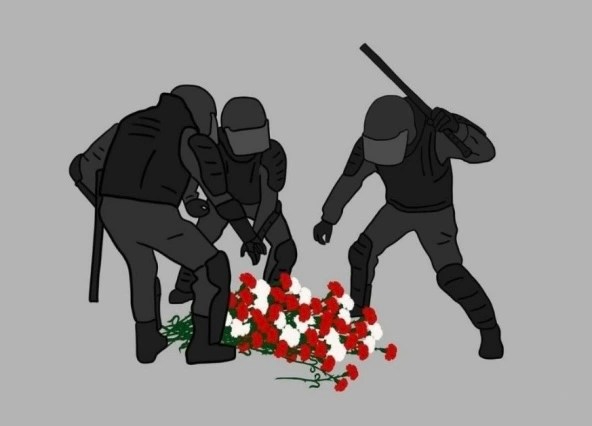
As the news of Navalny’s death surfaced, people across the country – and beyond – started bringing pictures, flowers and candles to memorials for victims of political repressions2 . Sounds innocent, but even turning out for a vigil may lead to repercussions: according to a local human rights watch, about 400 people (that we know of) have been arrested across 39 Russian cities over their participation in memorial activities – some as brief as sticking two carnations into the snow – in his tribute. Just imagine receiving a 10-day sentence3 of ‘administrative detention’ for a public display of grief. Or, perhaps, facing an additional 7 years in jail, should you express anything not in line with the state’s view on current affairs.
Now, we might not have questions for highest officials because their motives may appear rather straight-forward. The real question is: how do we understand why the perpetrators—countless judicial officials, jailers, police officers, security officials, and anyone in-between—obeyed this chain of orders from above? Just in the past few years, Navalny was poisoned with a nerve agent, sent him from one jail to another, tortured and tormented in brutal imprisonment conditions. The following opinion (@political scientist Tatyana Stanovaya) makes quite a lot of sense to me:
Putin’s attitude towards Navalny was openly contemptuous: as a petty swindler who does not deserve respect. Putin saw in Navalny a person who, in the hands of the conventional West, acts deliberately against the interests of the country and state. This attitude in itself “programmed” the system to be merciless.
[…] Showing humanity to Navalny within the system was too dangerous and unnatural given the political reality. Therefore, this degradation of conditions, the systematic “devouring” of Navalny’s health had no brakes.
Truly, nobody hates Russians more than their own country and fellow countrymen.
- Please check out the following articles if you would like to dig into this topics further (disclaimer: those are views that I resonate with); should you have issues accessing them, feel free to reach out to me: one, two, three ↩︎
- Given the country’s history, there are quite a few of them ↩︎
- Which can easily turn into criminal charges, if someone decides so ↩︎
***
What relevance does this story have for a blog on sustainable living? In my opinion, many parallels can be drawn here.
The sense of powerlessness, lack of alternatives, and the overwhelming feeling of doom experienced by the opposition can be mirrored in the hesitation or resistance many individuals feel towards engaging with global sustainability issues.
Similarly, the lack of interest in thinking about global issues often comes from a feeling of powerlessness among individuals. The concept of sustainability, while crucial, isn’t universally embraced. Some individuals feel overwhelmed by the daunting challenges it presents, rendering them powerless to enact real change. Others dismiss sustainability concerns such as climate change, overpopulation, and overconsumption as exaggerated. Additionally, there are those, including major corporations in their greenwashing marketing campaigns, who believe they are already doing enough and hesitate or even resist further action.
When an authoritarian leader seems unbeatable in elections, the opposition can still make a difference. They challenge the regime symbolically, speaking out against its crimes and reducing its legitimacy. By coming together, the opposition shows people they’re not alone. This unity gives them a sense of power and hope.

Collective action not only influences political discussions and laws but also underscores the power individuals possess in shaping decisions through voting and consumption choices. A practical, budget-friendly solution to address the carbon footprint issue involves cutting back on unnecessary purchases, opting for durable items, and reducing overall consumption. Although achieving significant impact alone may be challenging, making mindful choices collectively holds the potential to bring about meaningful and positive changes.
Here’s one: in 2018, Australia’s supermarket chain Coles decided to discontinue the provision of plastic bags at checkout. However, following customer complaints, Coles responded by providing its 15¢ reusable bags for free until further notice. After that, faced with a wave of public outcry, both on social media and from environmental groups, Coles once again reversed its decision, ultimately phasing out plastic bags. How’s that for public engagement?
However, we have also multiple examples that demonstrates how individual actions can create a ripple effect through social connections. Sure, activism is not for everyone. But consider this: the average British carnivore apparently eats over 11,000 animals in a lifetime: 1 goose, 1 rabbit, 4 cattle, 18 pigs, 23 sheep and lambs, 28 ducks, 39 turkeys, 1,158 chickens, 3,593 shellfish and 6,182 fish. Avoiding meat for over six years (in my case) adds up to more than just a personal lifestyle choice. It translates into a substantial reduction in the demand for animal products, sparing the lives of hundreds of animals that would have been part of the conventional food chain.
Recognising the privilege that comes with having the time, mental space, and easy access to sustainable living solutions is crucial (after all, how much can you do from a prison cell?). Just like when I was complaining to my mom, telling her about a problem that was me trying to drop off my compost on the weekend when the collection point is closed. Her teasing response, “It’s a nice problem to have,” struck a chord — it’s hard to argue with that point.
This brings me back to the very foundation of this project, knowing that many of us, particularly in peaceful and affluent places, can do more. If we can’t change the world overnight, let’s focus on what’s doable. It boils down to a five-step process:
- Step one, Reflection, is about identifying situations where I make excuses for myself and acknowledging areas where improvement is possible.
- Step two, Convenience, is finding changes that are relatively easy to make—things that might require just a couple of tries, like playing with vegan cooking, taking shorter showers, or getting into the rhythm of composting.
- Step three, Preparation, is a matter of planning and scheduling actions that need a bit more thought and effort, from checking the weather forecast for cycling to work tomorrow to allocating a day for volunteer work, ensuring it doesn’t clash with other overwhelming activities. Even lazy rest days deserve a spot on the schedule!
- Step four, Choice, is where sustainability becomes a lifestyle, and expands onto several habits and areas of life.
- Step five, Mindfulness, is taking a moment to evaluate actions and urges. Retail therapy often blurs the line between needs and wants. Are you getting something out of boredom or just for the thrill of it? Sleep on it. And then even if we do embrace shopping altogether, what option is the best
What might seem like an insignificant act one day becomes a powerful force for change when sustained over the long term – you never know,
***
Navalny’s website’s motto reads: “The Final Struggle between Good and Neutral”. This is a reference to a Futurama episode dating back to 2000. I have not seen the episode (nor the cartoon series, for that matter) so I am relying on third-party descriptions here, but my understanding of it is that keeping neutral, or inactive, or indifferent, or withdrawn can be just as negative as acting on ill intentions. Potentially, with similar outcomes.
***

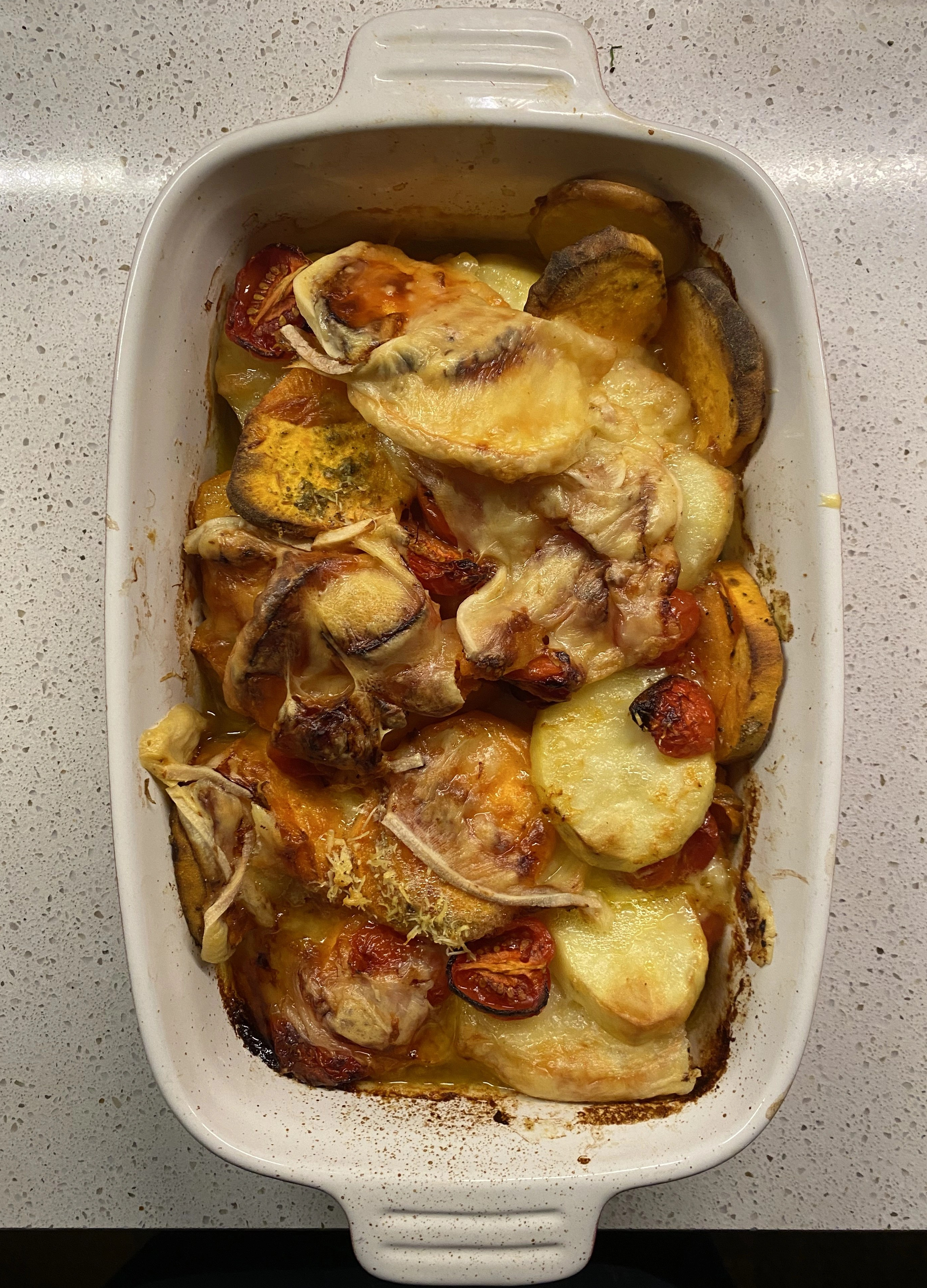
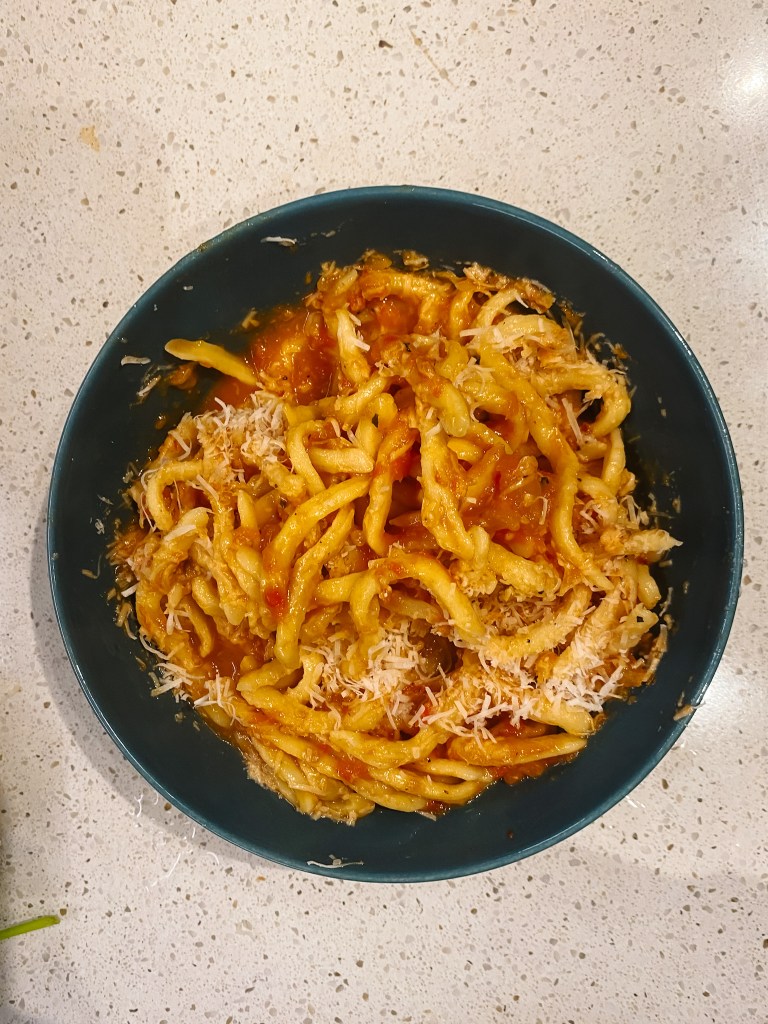
Grief, mixed with anger and sorrow, is a bit of a lonely place, and taking refuge in the comfort of my home so as to navigate through these feelings seemed to be the only available form of self-care right now. After going to a memorial service on Friday, I retreated to my own cocoon, either weeping or sleeping. Amidst this (self-imposed) dry winter, the temptation to reach for a glass of wine to ease the nerves has been strong — but alas, my trusty stash of (dairy) cheese had to provide some comfort instead.
I almost forgot about another veggie TGTG box that I had ordered the week prior (more on that in this entry) – a different source, a slightly higher price tag (€7.99), offering a more modest assortment of cherry and regular tomatoes, butternut squashes, cucumbers, mini cauliflowers, sweet potatoes, Belgian endives, spring onions, and mandarines.. This produce is definitely on its last leg, so it needs to be cooked or consumed almost right away.
And that, I find kind of poetic – just like these fruits and vegetables, emotions too required a form of ‘consumption’ or processing before they turn into something worse.
To sum up, this is the weekend’s progress:
| SUCCESS | FAIL |
|---|---|
| Don’t buy any material product for a week (except food?) | Vegan food (thanks to dairy cheese) |
| Unplug devices that are not in use | Volunteering |
| Cook one week only with stuff from Too Good To Go | Five-minute shower (more like five hours) |
| Collect rainwater | No single-use plastic |
| Join a community group | |
| Compost |
 Fair February
One response to “Gotta Keep Going”
❤ ❤ ❤
LikeLiked by 1 person