This is part two of this entry
Now that we’ve stepped into a world full of confusing, overly positive, and sometimes just plain wrong sustainability claims, it’s like trying to navigate the dating scene. You know, where labels mean defining a relationship and answering the question of “what are we.” Let’s see how tricky it can be to find out if things labeled “green” live up to the hype – it’s like sustainability’s version of a relationship status.
In general, an eco-label can be defined as a tag that certifies that a product is sustainable by disclosing all of its credentials. Such labels signal that a product is supposed to deliver at least on one of the following:
- Contributes positively to the environment or has no environmental impact whatsoever.
- Causes less harm to the environment compared to a previous version of the same product or service, or to a competitor’s offering.
- Positively impacts animal welfare or has no negative effects on animals or human welfare.
According to Ecolabel Index, the largest global directory of eco-labels, it is currently tracking 456 ecolabels in 199 countries across 25 industry sectors. But, not all labels are created equal, and consumers may find it challenging to decipher which ones they can trust. Thanks to the lack of standardised definitions of “green”, “eco-friendly,” “sustainable,” or “organic”, they can be deceptive and used as a mere marketing tool. In a 2020 study, over half of examined environmental claims in the EU were deemed vague, misleading, or unfounded, with 40% lacking substantiation.
Let’s consider a couple of examples to highlight this point. Imagine a skincare brand proudly proclaiming its use of all-natural ingredients — sounds good, right? Now, shift gears and think about botox. Yep, the one that might raise a few eyebrows. The thing is, the botulinum toxin in Botox is indeed natural. However, a slip-up in the dosage department can lead to serious problems, like botulism. In such cases, it’s not so much about where the ingredients come from but the crucial certifications from health authorities. It’s a demanding process, both in terms of effort and cost.
Now, onto the claim of ‘chemical-free.’ It might seem like a solid selling point, but let’s be real – no product can escape natural chemistry. This rings especially true for cosmetics. Where some are marketed as ‘chemical-free,’ a more accurate term would be ‘free of artificial substances.’
In turn, does a vegan iteration of a certain product immediately signal better from a sustainability standpoint? Vegan leather is often pushed as a green alternative to traditional leather, but the reality is, most vegan leather is just rebranded “pleather” – essentially plastic leather made from synthetic, fossil fuel-based materials like polyurethane or PVC. Completely plant-based options are in the makes but they’re not widespread yet. That being said, while all these materials are technically “vegan” because they do not use animal products, calling it “environmentally friendly” can be misleading at best.
Another case of fraud trick is placing labels without specifying what part of the product it refers to. If you see an innocuous label “Made from recycled materials” attached to a sweater touted its recycled nature, what do you think it refers to? Upon closer inspection, you might find out that the recycled reference pertains only to the label itself, not the garment. That is indeed a deceptive ploy, but without legal repercussions.
But there is more to it: focusing solely on the material’s organic nature provides a very limited picture of sustainability. It’s important to consider the entire supply chain, including labour conditions of those making your products. Even if a material is organic or eco-friendly, unethical labour practices can significantly impact the overall sustainability of a product. Supporting fair trade practices involves backing local producers and communities, respecting human rights, eliminating child and forced labour, ensuring living wages (as opposed to minimal pay required by law), maintaining safe working conditions in both production and supply.

Let’s have some fun – think of it like a swiping game on a certain app! Can you quickly tell the difference between these logo pairs?
Vegan vs Cruelty-free? => click to expand
Biodegradable vs Compostable? => click to expand
Biological vs Ecological? => click to expand
Recycled vs Upcycled? => click to expand
Recyclable vs Reusable? => click to expand
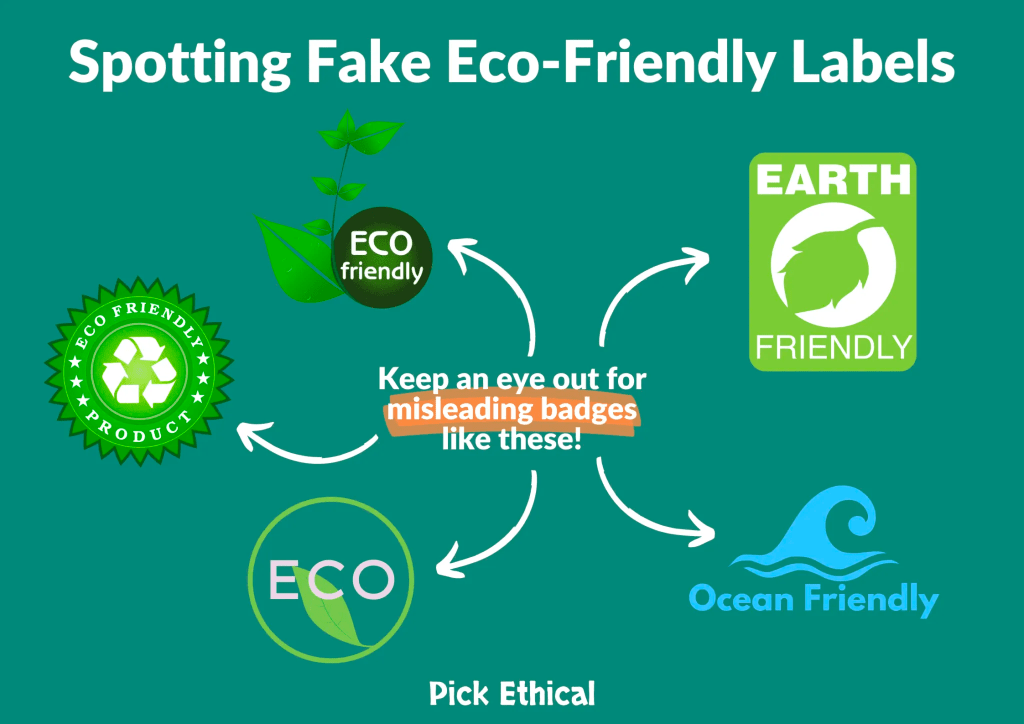
The most reputable companies will have used trustworthy certifications on their packaging to prove their product’s sustainability, but the process to secure these well-known certifications can be long and costly. This is why some companies use generic badges to help consumers know that their products has been designed with the environment in mind.
The absence of consistent rules for voluntary green claims creates an uneven playing field in the market, disadvantaging genuinely sustainable companies. Recognising the urgency to tackle this issue, the EU has proposed a new law to combat greenwashing and protect consumers and the environment. The Directive on Green Claims aims to set some ground rules, demand independent verification of claims, and make sure those environmental labels aren’t just pretty words on a package. Time will tell!
***
What is the difference between the two dishwasher tablets 🍽️?
These tablets contain various ingredients that contribute to cleaning, such as enzymes breaking down dirt, fragrances for a pleasant smell, and non-ionic surfactants dissolving dirt at low temperatures. To ensure environmentally friendly options, environmental quality marks like the European Ecolabel (which the eco tablet had in this case) guarantee fewer harmful substances, reduced water pollution, lower energy consumption, and less waste. Considerations also extend beyond ingredients to raw materials, packaging, and transport.
However, residues of dishwasher detergent end up in sewers, posing challenges for sewage treatment plants to filter out all particles efficiently. Potentially harmful – but not banned – substances like microplastics and musk compounds, addressed by environmental labels, are limited in ecological products but may be present in ‘standard’ dishwasher tablets.
***
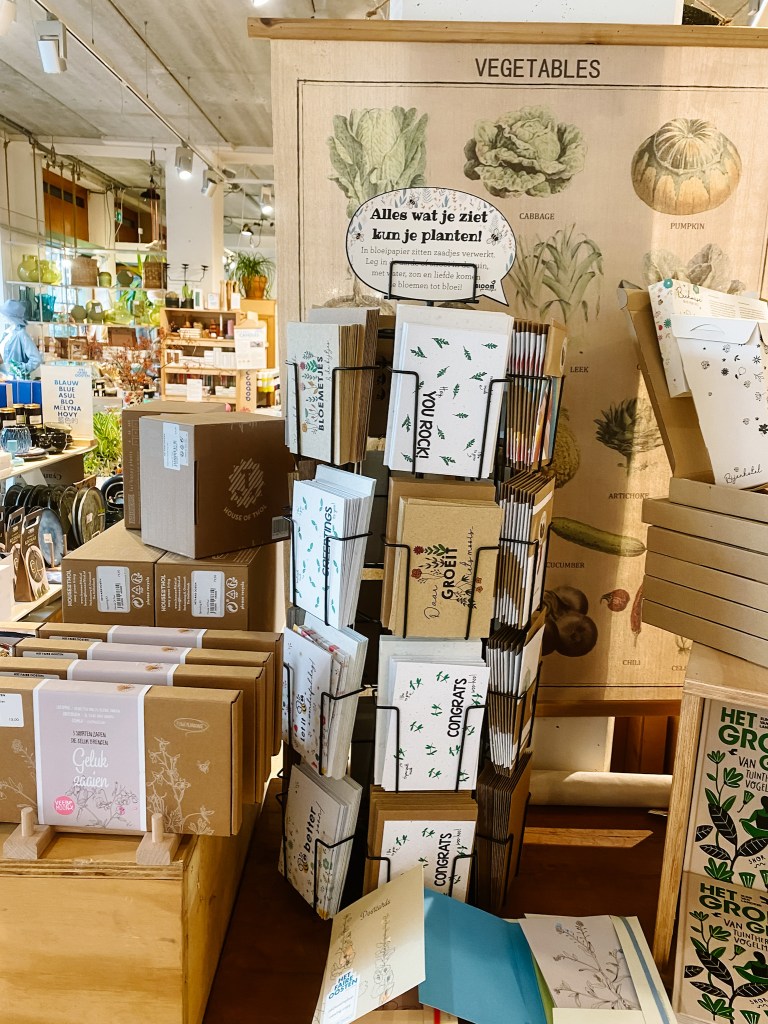
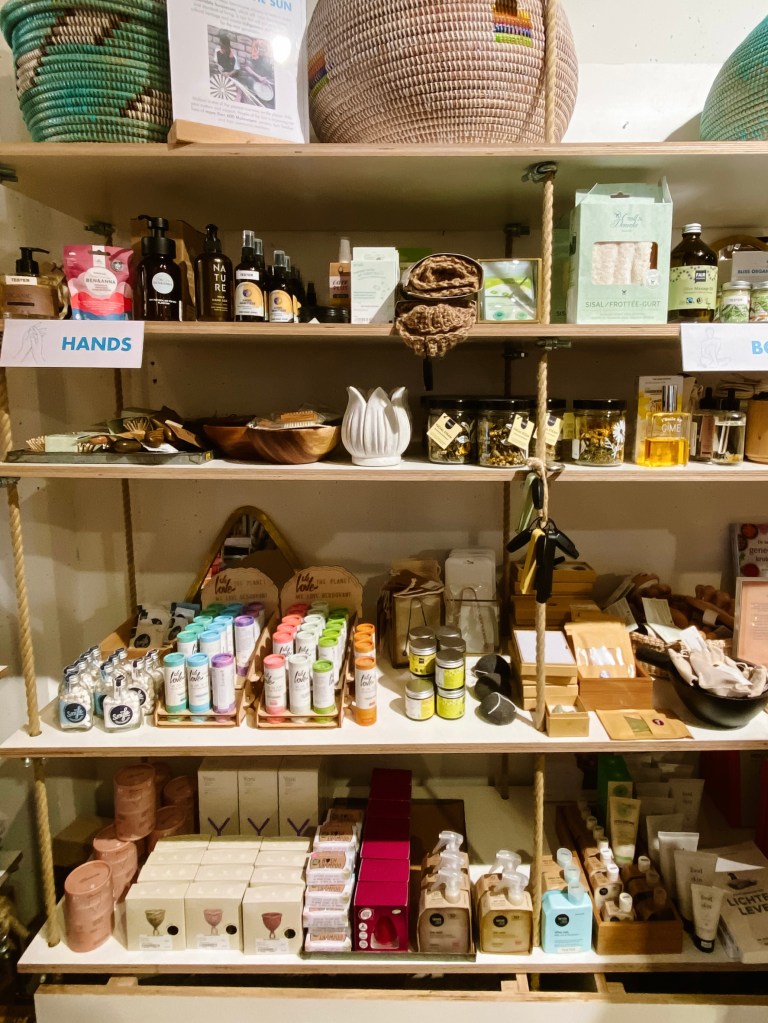
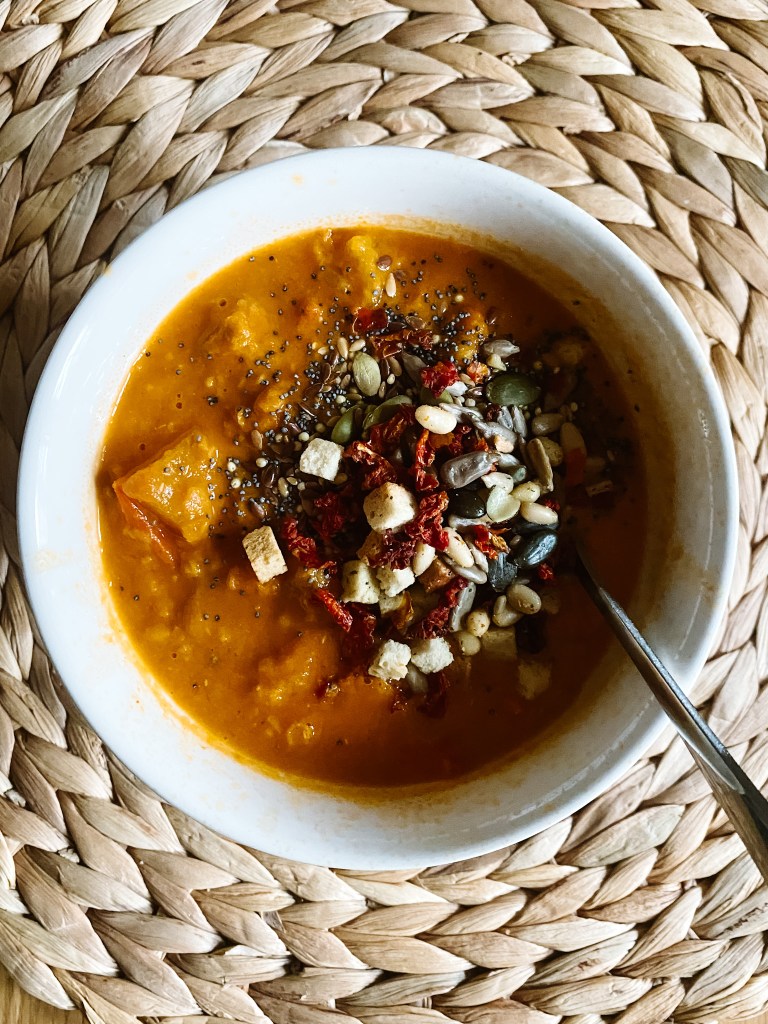
Among the challenges tackled today were vegan food (pictured above is a butternut squash curry with coconut milk and lentils), looking for more sustainable alternatives for some of single-use stuff I have at home (primarily skincare related) and shopping for a couple of gifts. Speaking of the latter, I found a store offering really cute cards (pictured above) made with flowering paper, also known as growth paper or seed paper. Each card contains flower seeds, meaning it can be planted in any garden! 🌼
To sum up, this is the past today’s progress:
| SUCCESS | FAIL |
|---|---|
| Vegan food | No purchases of brand new items |
| Unplug devices that are not in use | No single-use plastic |
| Five-minute shower | |
| Identify household items to be replaced with environment-friendly alternatives | |
| Go paperless (almost??) | |
| Compost |
 Fair February
Leave a comment