Getting ready for the final days of February and, consequently, the end of this month-long challenge, I’ve noticed there are still a few tasks left unattended. One of them, I’ll tackle tomorrow, but I want to set the stage for it in today’s entry. It’s an observation coupled with technical research that might spark some reflection when you go back to review your purchases.
For tomorrow’s activity, I am on a hunt for PP bottles around my house. PP refers to polypropylene and is a durable, lightweight, and heat-resistant plastic. Thanks to its high melting point, it is suitable for a variety of applications: from packaging containers (such as yogurt cups and margarine tubs), bottle caps and plastic utensils to medical devices, automotive components, and textiles.
After an extensive search, I found only one (!) bottle clearly identifiable as Type 5 (PP) plastic. While many items appeared to be Type 1, identifying the plastic type in others proved challenging or even impossible. Even if I want to recycle all my containers, bottles and whatnot — and why wouldn’t I, already mentioning the scope of plastic pollution in this entry — it really doesn’t seem to be a walk in the park (or is it a walk in the plastic park now? hmmm)
The predominant plastics in use today are virgin, derived from crude oil or gas. Despite a significant increase in global production of plastics from recycled materials – quadrupling from 6.8 million tonnes (Mt) in 2000 to 29.1 Mt in 2019 – this constitutes merely 6% of total plastics production. So far, only a minority of countries have imposed landfill and incineration taxes that encourage recycling.
But things are very different in Sweden, the almost unicorn-like country. Swedes have adopted a meticulous approach to waste separation, utilising different coloured bags for various types of waste. Once collected, recycling plants employ advanced sorting processes to distinguish between recyclable and non-recyclable materials. The non-recyclable waste undergoes a unique and eco-friendly disposal method through incineration, known as “waste to energy.”
This not only powers around 250,000 homes but also heats up 1 million homes in Sweden. And if that’s not impressive enough — they’re so good at it that the Swedes don’t even generate enough trash to keep all their plants running. They are making bank by importing trash as well, raking in around US$100 mil by getting other countries’ waste to recycle. Countries like the United Kingdom, Norway, Ireland, and Italy are happily paying 43 bucks for every tonne of waste that Sweden takes off their hands. One person’s trash is another person’s treasure, huh!

Back to the rest of the world though, plastics get sorted based on their type, either by hand or using automated systems, sometimes even by colour. Once sorted, there are two main methods for recycling: mechanical and chemical. In mechanical recycling, the plastic is washed, ground up, and melted down to be used again. Chemical recycling, on the other hand, breaks down the plastic into monomers, which can then be used to create new polymers.
- PET (Polyethylene Terephthalate):
- Common Uses: Beverage bottles, food containers, polyester fibers.
- Recyclability: Widely recycled; commonly used for recycling into new PET products.
- HDPE (High-Density Polyethylene):
- Common Uses: Milk jugs, detergent bottles, plastic bags, containers.
- Recyclability: Highly recyclable; often recycled into plastic lumber, pipes, and containers.
- PVC (Polyvinyl Chloride):
- Common Uses: Pipes, cable insulation, construction materials, clothing, inflatable structures.
- Recyclability: Limited recycling due to challenges in separating additives.
- LDPE (Low-Density Polyethylene):
- Common Uses: Plastic wraps, squeeze bottles, shopping bags.
- Recyclability: Recyclable but often not accepted in curbside programs; recycled into products like plastic lumber, garbage can liners, and floor tiles.
- PP (Polypropylene):
- Common Uses: Bottle caps, yogurt containers, disposable cutlery.
- Recyclability: Widely recycled; used in the production of automotive parts, garden tools, and storage bins.
- PS (Polystyrene):
- Common Uses: Foam packaging, disposable cups, food trays.
- Recyclability: Limited recycling due to challenges in sorting and contamination.
- Other Plastics (including various resins):
- Common Uses: A catch-all category for various packaging, electronic components.
- Recyclability: Depends on the specific resin; recycling options vary widely.
Life is not made to be easy though, unless you’re plastic. The lack of standardised labeling complicates matters; most products don’t have clear identification because resin identification codes, usually found in recycling symbols, aren’t mandatory. This absence of clear labels becomes even trickier with items like packaging films or multi-layered materials, where a mishmash of plastics makes it tough to pinpoint a single plastic type.
In terms of waste collected for recycling, things can get pretty uncertain. Take Europe: two-thirds of the plastic waste that is collected and sorted here is not actually recycled in Europe; it’s either incinerated, landfilled, or exported outside the EU.
On the receiving end, importing plastics can offer economic benefits, especially when recycled plastics are repurposed into various goods. At the same time, risks are higher. This article looked into how low-to-middle-income countries, where plastic waste faced a higher risk of entering the ocean due to inadequate waste management systems, imported approximately 1.6 million tonnes of plastic waste from rich nations in 2020 alone. If we assume that all this traded waste was poorly managed and ended up as litter or in landfills, it raises concerns about its impact on the environment. While not all imported plastic waste may be mismanaged, taking a cautious approach helps highlight the potential risks associated with plastic waste imports and the need for better waste management practices worldwide.
***
Today’s activity-full agenda was quite a challenge in itself, as my energy levels are far from high right now. But hey, little strokes fell great oaks.

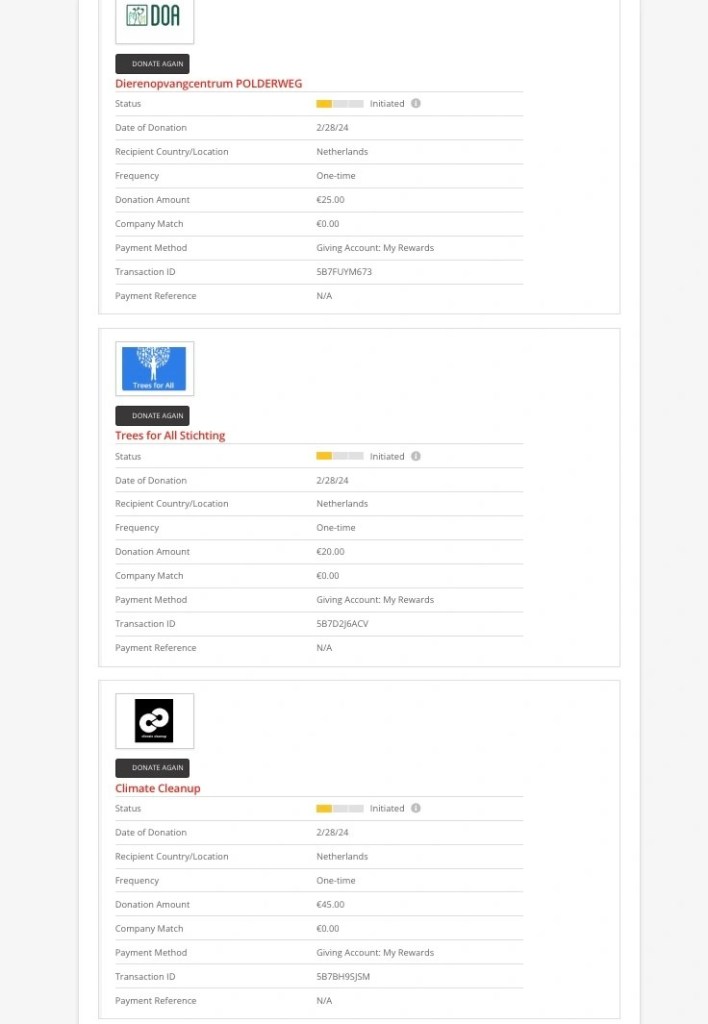
At work, I can turn my volunteer hours into donation money (yeah, real cash $$$) that can be send only to charitable causes. So, I’ve been collecting some cash since the beginning of the year and thought, why not share it now? We’ve got a loooong list of charities to pick from globally, but if there’s a good cause with a solid track record, we can nominate it too. Among the organisations I chose this time are:
- Bellingcat is an independent international collective of researchers, investigators and citizen journalists using open source and social media investigation to probe a variety of subjects – from Mexican drug lords and crimes against humanity, to tracking the use of chemical weapons and conflicts worldwide. With staff and contributors in more than 20 countries around the world, we operate in a unique field where advanced technology, forensic research, journalism, investigations, transparency and accountability come together.
- Free a Girl frees children from sexual exploitation by offering victims direct help, acute aftercare and tackling impunity. We help survivors obtain justice by tracking down perpetrators and tackling impunity. works with fourteen partner organisations in Bangladesh, Brazil, China, India, Laos, Nepal, the Netherlands, and Thailand. To date, they have rescued 7,528 girls and boys worldwide.
- Climate Cleanup Foundation aims to reverse climate change by developing natural climate solutions in actual projects and fosters the fundamental conditions for the new nature economy. Their methods for carbon removal and nature restoration scalable solutions are focused on seaweed, trees, sand, soil and materials (see below).

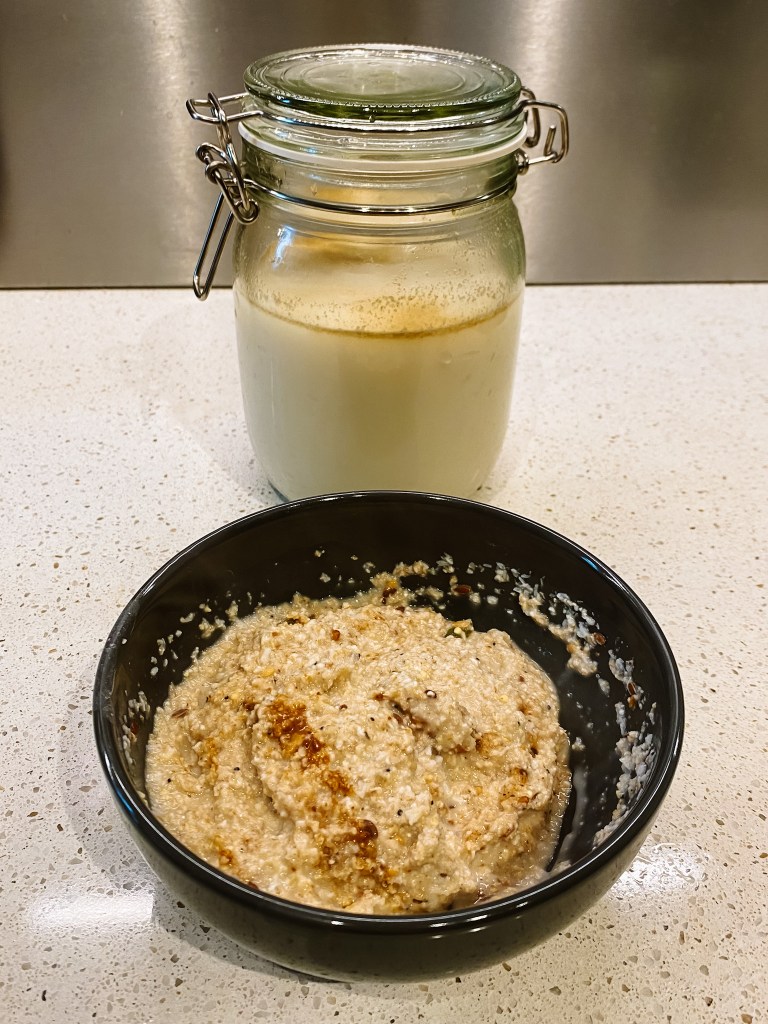
Moving on, I’ve been wanting to give homemade non-dairy milk a shot. It’s a straightforward process, but I keep forgetting to try it out. Oat milk seems like the simplest (and arguably, the most sustainable1) since it needs no prep, and I probably have all the necessary ingredients in my cupboards. After browsing a couple of recipes, this one grabbed my attention. The result was tasty, and luckily, not too sweet because I swapped maple syrup for agave. All in all, the whole thing took 5 min, including cleanup, and the the leftover pulp made a delicious oatmeal with peanut butter and flaxseeds – great waste-free outcome!
Other challenges tackled today include a visit to my neighbour — to make it feel less awkward and forced, I used the pumpkin bread as an excuse to say hi. It honestly makes me so sad that I need a challenge like this to remind me to do something so small and yet important (I explained this in the challenge overview entry). But, if baking treats is what it takes, then so be it — I will just bake more often.
To sum up, this is today’s progress:
| SUCCESS | FAIL |
|---|---|
| Wasteless cooking | Five-minute shower |
| Vegan food (thx TGTG box) | Bike to work (cold cold rain) |
| Learn to how make one new thing | Unplug devices that are not in use |
| Make a donation | No waste (mail) |
| Use stairs instead of elevator | |
| Compost (apricot kernels) | |
| Plant a tree (sort of) | |
| Check in on neighbour |
- Based on a consolidated environmental impact of emissions, water use and land use, as discussed in this blog post ↩︎

 Fair February
Leave a comment