
Time to make this bonus day count and wrap up my green mission with a bang! As the sun sets on this leap February, I find myself in a race against time tying up loose ends. Sure, there are a couple of challenges left, whether it’s my advanced procrastination skills, a dash of laziness, or life just rudely interrupting my eco-quest. But fear not, dear readers, for I’ve got an idea or two.
Let’s tackle a challenge I knew would be a hurdle from the get-go – and that is exactly why it made the list. Planting a tree when you do not have a garden or any other piece of land surely was bound to be tricky. I asked Google if there were any opportunities in my neighbourhood or in the area of Amsterdam and found out that in November last year, the city was giving away 1,000 trees to residents for free encouraging them to plant them wherever they saw fit – whether in their gardens, schoolyards, or sports clubs. I also learned that the municipality welcomes every newborn Amsterdammer with a sustainable birth gift, offering parents the choice to plant a tree instead of receiving a traditional cuddle cloth. Opting for the birth tree comes with a special certificate, complete with a QR code that tracks the tree’s project placement.
Then I came across Plan Boom, a project with the ambitious goal of planting 10 million trees throughout the Netherlands. Their reach spans gardens, roadsides, public spaces, parks, industrial estates, and rural areas. Among other things, they provide a toolbox for tree huggers those planting trees on their own as well as offer volunteering opportunities for those like me so I jumped on this opportunity and signed up. However, the anticipation has been like waiting for a tree to grow – the website promised volunteers would be contacted once planting campaigns were organised, typically running during planting season (from November to March). But I am yet to hear back from them, having registered in early Feb.

Running out of ideas, I turned to Trees for All, a Dutch Public Benefit Organisation (ANBI) with a CBF certificate. Their mission: to plant forests both in the Netherlands and abroad. From birthing new woodlands in the municipality of Oegstgeest to bestowing four million bushes upon local farmers in Mali, and even partaking in the restoration of richly diverse forests in Uganda’s Kibale National Park, their impact spans continents. To put my green money where my mouth is, I made a donation to plant 2 trees directly via their platform, and 9 more using the donation credits I talked about in yesterday’s post.
The next challenge on my checklist demanded a deliberate choice of support for a local start-up, initiative, or small business, preferably one with an environmental or social purpose – this is what I call voting with your wallet. Technically, this challenge received an early checkmark through my volunteering at de Sering (which I covered here) as well as taking part in their seven-course vegan dining experience there a couple of weeks back (covered here). But, why stop there? I dug around and found two more gems to explore.


First on the list – The Upcycle, a quirky local shop boldly proclaiming stating that ‘Waste is food for creativity’ . The initiative’s mission is clear in its name: for example, they turn bicycle chains into necklaces, inner tubes into earrings and outer tubes into belts. While my current mission involves steering clear of unnecessary shopping, what lured me in was thei Waste Wonderland, a neighbourhood lab dedicated to collecting and upcycling separated waste like denim, candle wax, and type 5 plastic (PP). Armed with a bottle (discussed here) and leftover candle wax to contribute, I eagerly made my way to the shop, only to discover that the lab was on hiatus – helaas pindakaas. Despite my efforts to reach out on Instagram, the mystery remains unsolved.
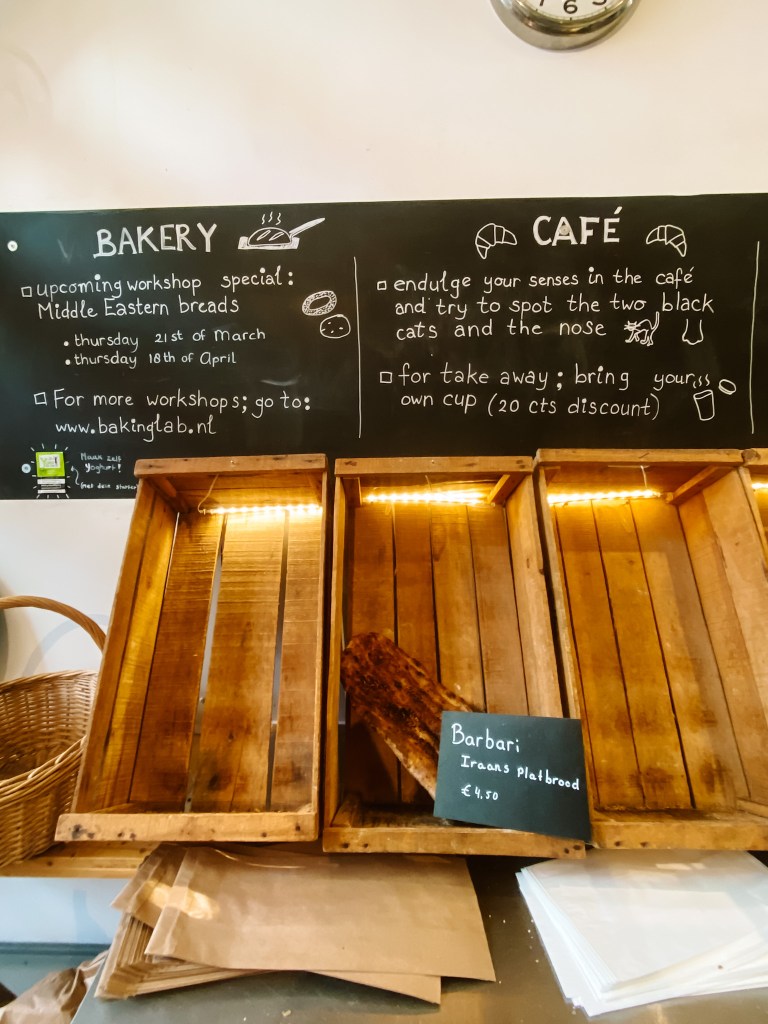
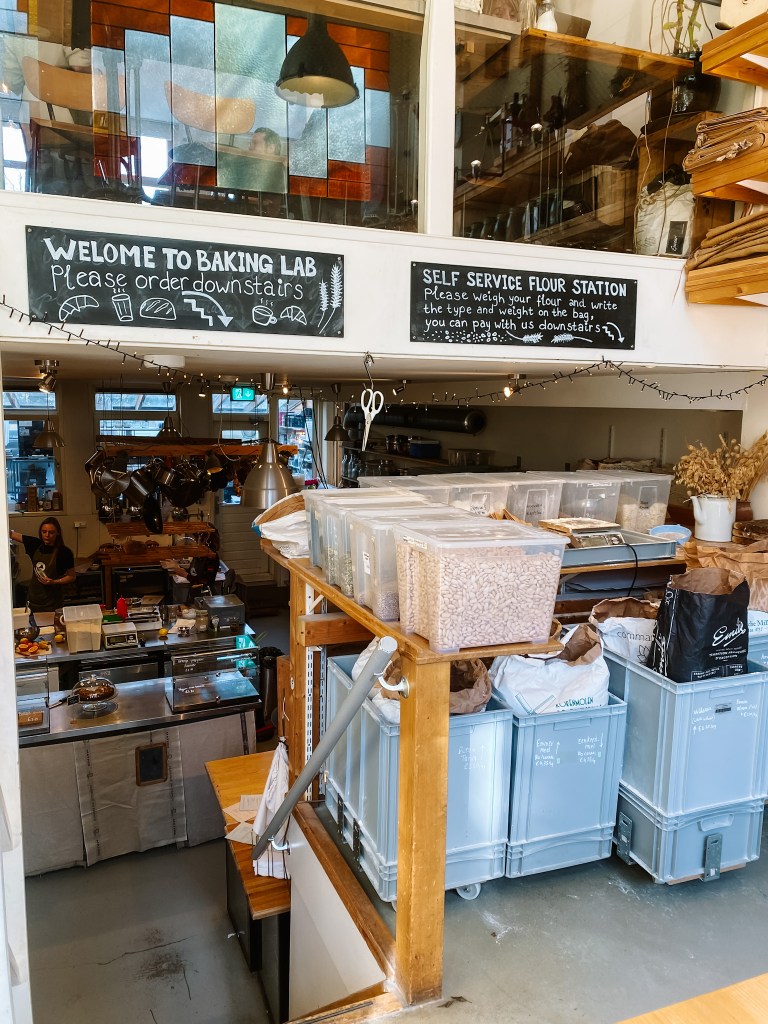
The other one is Baking Lab. It is an educational, interactive, and circular bakery opened in 2017, committed to teaching the traditional art of bread making with the integration of modern science. Its founders envisioned an open bakery where people could engage in the bread-making process with a focus on vegetarian, organic, and locally sourced ingredients. Baking Lab also aims to reduce food waste by repurposing old bread into new loaves and creating dishes from fruit and vegetable fibres. The lab has grown into a school for circular entrepreneurship, employing university students from various disciplines and offering workshops that not only teach bread making but also provide business management skills for running a circular bakery.
During my visit, I got coffee, hummus sandwich, and snagged the last remaining piece of bread (those shelves clear out fast!).

Approaching the next task on the green agenda: wasteless cooking (and vegan, if possible). My inspiration for this challenge has been brewing for months, thanks to the amazing Plant You insta page. The lady behind the account, Carleigh Bodrug, runs a scrappy cooking series, where she transforms common food scraps into simple, low-cost, zero-waste recipes that result in mouthwatering plant-based dishes. Every time a new video drops, I think to myself – I have to try this! – only to find my way back to my old cooking habits the next day.
Zero-waste cooking isn’t a one-size-fits-all solution but involves adopting various hacks and routines, each making our kitchens a tad bit more sustainable (check out the full list below). Of course, composting is an obvious solution (bonus: nailing that all month so indirect win for this challenge!), but my aim was to embrace cooking that makes the most out of every ingredient To my surprise, I stumbled upon The Scraps Book from IKEA while searching for inspiration. Turns out, in 2021, Ikea Canada collaborated with 10 chefs from across North America to tackle the growing problem of food waste, resulting in a 214-page guide to make smart decisions in the kitchen available as a free download. Well done, peeps in Canada!
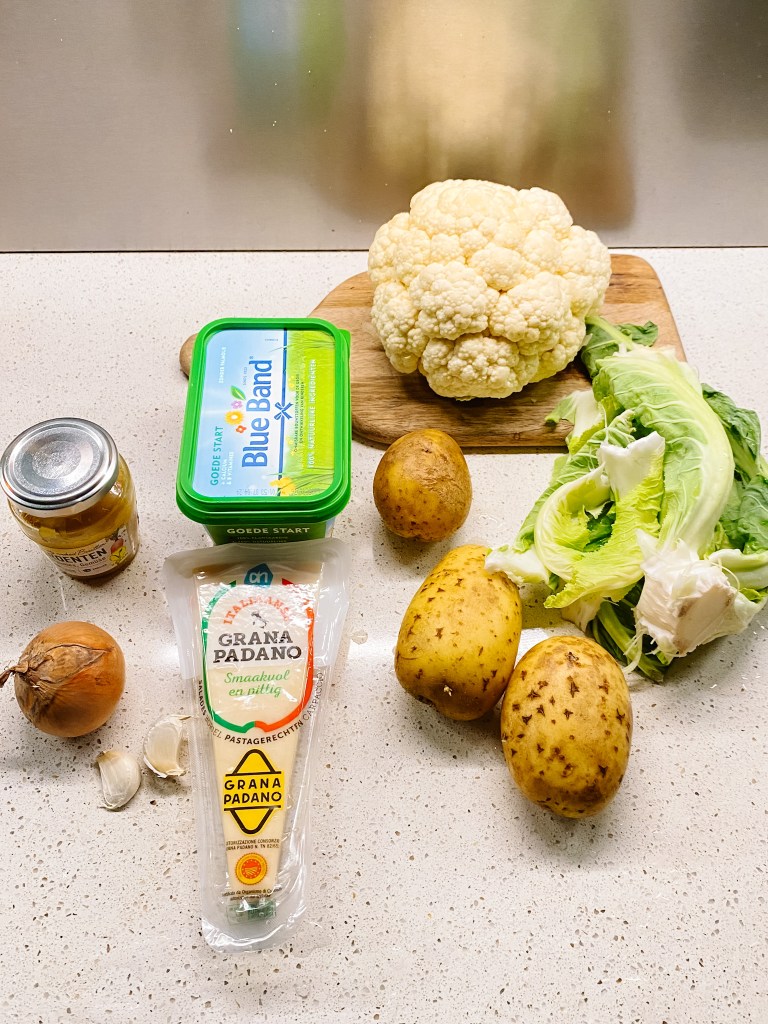
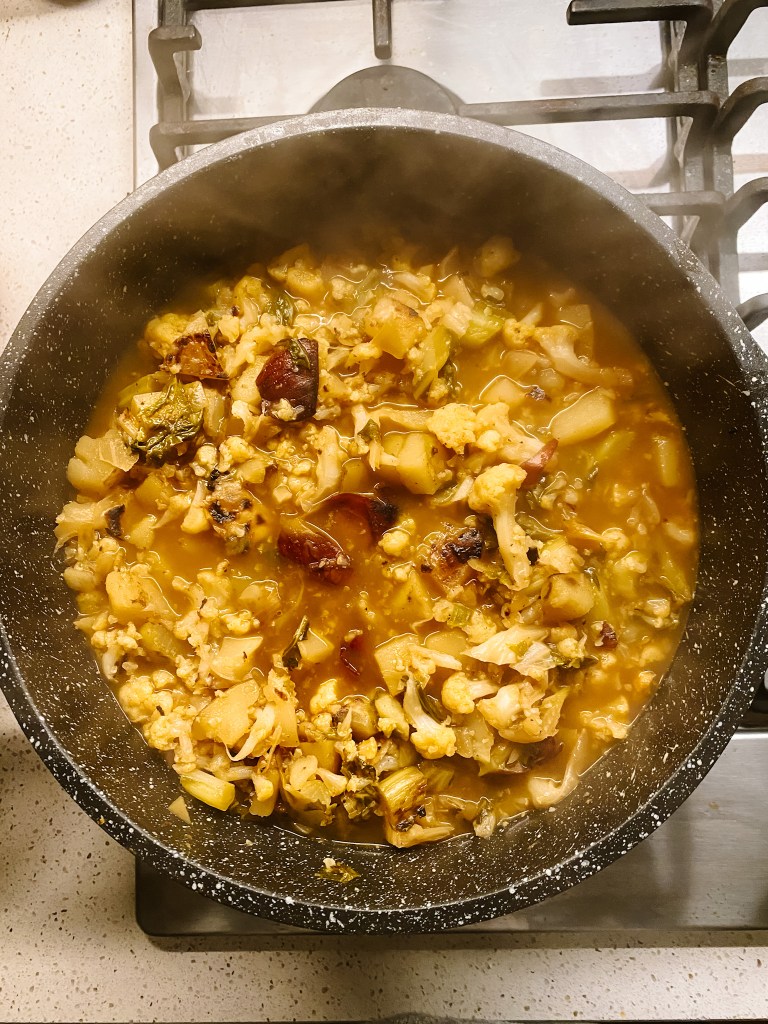
Still very much in my soup phase, I went for a cheesy cauliflower and potato soup that embraced every bit of the vegetables – from garlic and onion skins to potato peels and cauliflower stalks and leaves. The veggies were sourced from the TGTG box I got a couple of days ago. My cheese choice, though, unfortunately took a dairy detour from vegan. Despite experimenting with various vegan cheeses this month, I opted to use the cheese chilling in my fridge for a while. Oh well – reducing waste is also making use of what you already have. Once ready, I blended everything together – and voilà, it tasted absolutely delicious!
***
How to cook zero-waste?
- Scrap Repurposing: Instead of discarding vegetable scraps, use peels, stems, or leaves. to make homemade broth, puree, sauces, jams, or sauté and make pesto with veggie leaves and stems. Bones and meat can be used for broth, while cheese rinds can be frozen to add flavour to soups later.
- Preservation: Preserve fruits and vegetables through canning, pickling, fermenting, or dehydrating to extend their shelf life.
- Regrowing: On your kitchen counter, you can regrow many things – green onions, lettuce, celery, basil, coriander, garlic greens, ginger, mint, rosemary, and lemongrass – with no soil by placing their cuttings or roots in water. Roots, seeds, pits and cuttings can also be planted in pots or in the garden.
- Composting: Compost fruit and vegetable scraps, along with other organic waste, to create nutrient-rich compost for gardening.
- Garden Fertiliser: Use coffee grounds and crushed eggshells as natural fertilisers for plants and gardens.
- Flavour Infusions: Use fruit peels to infuse oils, vinegars, spirits and bitters for unique flavours.
- Roasted Seeds: Season and roast seeds from squash or other vegetables for a crunchy snack or salad toppings.
***

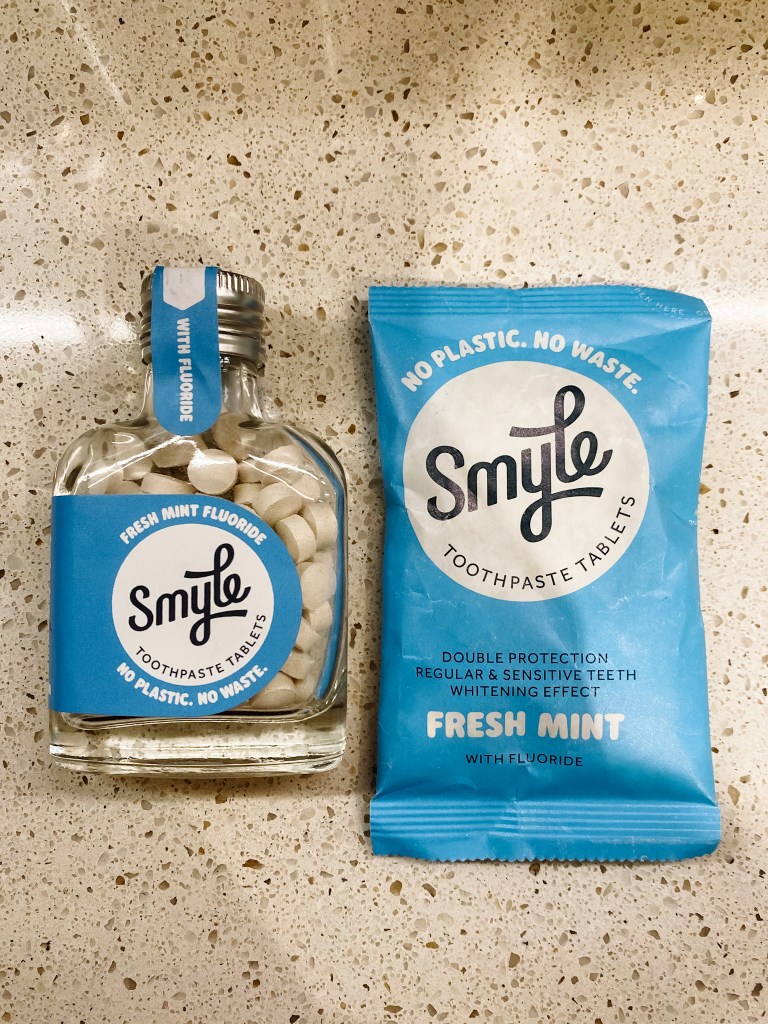
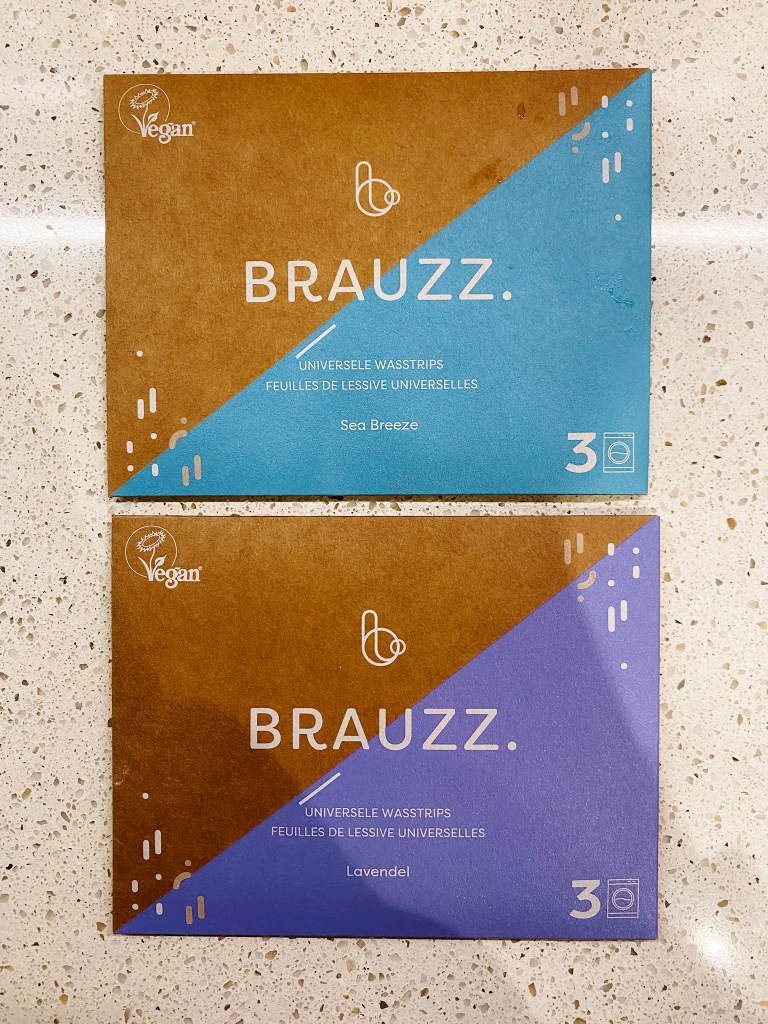
On a different note, let’s take a quick look at my drugstore trip in preparation for upcoming travels, aiming to lighten both my backpack and my environmental impact. The haul included solid shampoo and shower bars, reusable cotton pads, toothpaste tablets neatly packed in glass bottles and paper bags, each containing 60 pieces, and laundry sheets. If you are curious to learn about other swaps you can make to make your toiletry bag a bit greener, check out this entry.
To sum up, this is today’s progress:
| SUCCESS | FAIL |
|---|---|
| Wasteless coking | Five-minute shower |
| Unplug devices that are not in use | Vegan food |
| Plant a tree (sort of) | Clean out email inbox |
| No waste | |
| Support a local business* |
 Fair February
Leave a comment