
Let’s discuss this: Once we’ve got our basics covered – bills paid, food reliably on the table – we move on to expressing ourselves through what we choose to buy.
This idea often crosses my mind at work, especially when I’m looking into “green makeovers” for everyday stuff like clothes or skincare. It’s also at the heart of this very project. What gets me thinking is the real motive behind it all: Are we splurging (both in cash and feelings) on our daily grind and possessions just because we believe they’re the ‘better’ versions of what’s out there? Or do we actually believe in doing something good by choose these ‘better’ products? Bear with me for a second.
Enter Havermelkelite, a blog that has soared in popularity among Dutch and NL-based users of Instagram. Journalist Jonas Kooyman, the brains behind it, coined the term with a reference to the growing popularity of oat milk lattes back in 2019. Now the blog covers all aspects of ever-changing trends of the yuppie life with a Dutch touch: from said havercino’s, artisanal bakeries and natural wines to Salomon sneakers, e-bikes and beige interiors. How very unique.
This account, serving as both a celebration and a playful jab at a particular affluent demographic, paints a portrait of a seemingly dull affluent group with a hint of self-righteousness. Dropping a few euros (a few too many?) on a perfectly pulled shot of single-origin, Fairtrade espresso with steamed oat milk shows you’re serious about good coffee. It’s like voting with your wallet every morning, treating your brew like a fancy glass of orange wine or an indulgent 10-euro sourdough loaf – something to savor, not just a quick pick-me-up. Public commentary often raises questions like: “So, is saving the world now as simple as getting your caffeine fix with non-dairy milk and your alcohol without sulfites?”
Kooyman suggests that what this new urban middle class likes to demonstrate their preferences for food, drink and other purchases with a sprinkle of holier than thou moral judgement. But, hold on – is it just them?
Not at all! Swedish oat milk brand Oatly went under fire following its campaign ‘Wow, No Cow’. Please do yourself a favour and watch it: as the video description has it, “In a one of a kind performance, multi-talented CEO Toni Petersson sings a song he wrote entirely by himself to explain exactly what Oatly is all about.”. The ad had a rather provocative tag line, “IT’S LIKE MILK BUT MADE FOR HUMANS”, which triggered angered the dairy lobby LRF Mjölk. The dairy lobbyist took the company to court over this slogan, accusing it for being misleading and “scaring [consumers] into thinking cow’s milk is dangerous”. The Swedish Court ruled against Oatly, banning use of the provocative slogan in Sweden in 2015.
Yet the company went as far as plugging this ad during the 2021 Super Bowl, aka the most expensive air time ever (ad slots cost as much as $7 million for 30 seconds). You guessed it, the commercial went absolutely wild and sparked a flurry of reactions across social media. The outcome? Despite the controversy it sparked in Sweden and beyond, Oatly came out of this smelling of oats roses.1
So, where did this idea of an oat milk following come from? It was inspired by Kooyman’s interview with Elizabeth Currid-Halkett, an American scholar interested in aspirational classes. Havermelkelite is, in practice, a translation for the term describing a community of people who strive to become (?) better through their conspicuous and deliberate consumption choices. These choices, in turn, are meant to be recognised by those “in the know”: they convey signals of shared cultural capital and status symbols.
But this name is not so origional. Already in 1997, the term “latte liberals” was used in an article in a reference to towns where “liberalism is a dominant lifestyle as well as the unchallenged ideology, and where social concern takes the form of concrete activism”.
In other words, while America’s diligent, working-class individuals rely on brewing pots of instant coffee to sustain them during long hours at steel mills, lattes and whatnot are considered a luxury reserved for the privileged classes. So much for mere lifestyle choices and not political statements.
Curious, I went onto reading Currid-Halkett’s book “The Sum of Small Things: A Theory of the Aspirational Class” to see if it would address with my concerns. There, she discusses how conspicuous consumption is hardly a new trend, it is just that before the Industrial Revolution and the advent of steam engines, only the wealthy could afford many items. Things like sewing machines and typewriters, which were the Victorian counterparts of today’s electronics, remained out of reach for the majority. With almost everything being easily accessible these days (just think about how fast smartphones lost their luxury status), typical status symbols have lost their class distinction. Now, it’s all about flaunting your smarts and cultural know-how, like opting for organic produce and hitting up yoga classes.
For these new so-called latte liberals (who, of course, do not have to be liberal at all), sustainability matters in where they spend their money, and they look for markers of social and environmental awareness from the companies they support.
For the aspirational class, the choice of particular fabrics, wood, or foodstuffs has to do with acquiring knowledge of what is superior, more environmentally friendly, and more humane. We find these subtle signs of class in everything from what the aspirational class eats (gourmet, organic, and humane comfort foods), where they buy groceries (farmers’ markets and Whole Foods), what they wear (organic cotton and made in the USA with no labels), and what they talk about (articles in the Wall Street Journal or the most talked-about podcast, which at present is Serial). All of these subtle cues suggest knowledge and a value system acquired through extensive acquisition of knowledge—and an aspiration to achieve a higher cultural and social way of being and a nonchalant worldliness about books, news events, and so forth.
Does your head hurt a little while reading this? Mine sure does. If merely buying certain things or shopping at certain places (or doing whatever else) give one a sense of moral satisfaction, it is reasonable to suspect that it might fall short of actually contributing to a substantial positive change in the world. Perhaps this kind of progressive consumption is naive at best.
Of course, this is not the only argument presented in the book. The author herself points to the criticism that it is easy to be ethical and a “good citizen” while shopping at Whole Foods or Neiman Marcus’s “wellness shop”, where paying a premium price is more about fulfilling personal desires related to identity than solving environmental or social issues. At the same time, she argues, by ‘normalising’ some of these behaviours and making them mainstream, for the lack of a better word, this group of consumers drives demand for more environment- or society-oriented products (or services). And, as we know, demand brings supply.
As I wrap up this stream of consciousness, I find myself conflicted. On one hand, I believe the outcome matters most, and if positive change emerges from some trends, why fix what isn’t broken? At the end of the day, even if all switch to canvas totes just to look cool, we can end up preventing so much plastic waste. On the other, I cannot help but wonder whether the means defeat the purpose – if showing off such greenness may be an end in itself and thus diverting attention from actually impactful acts…. what do you think?
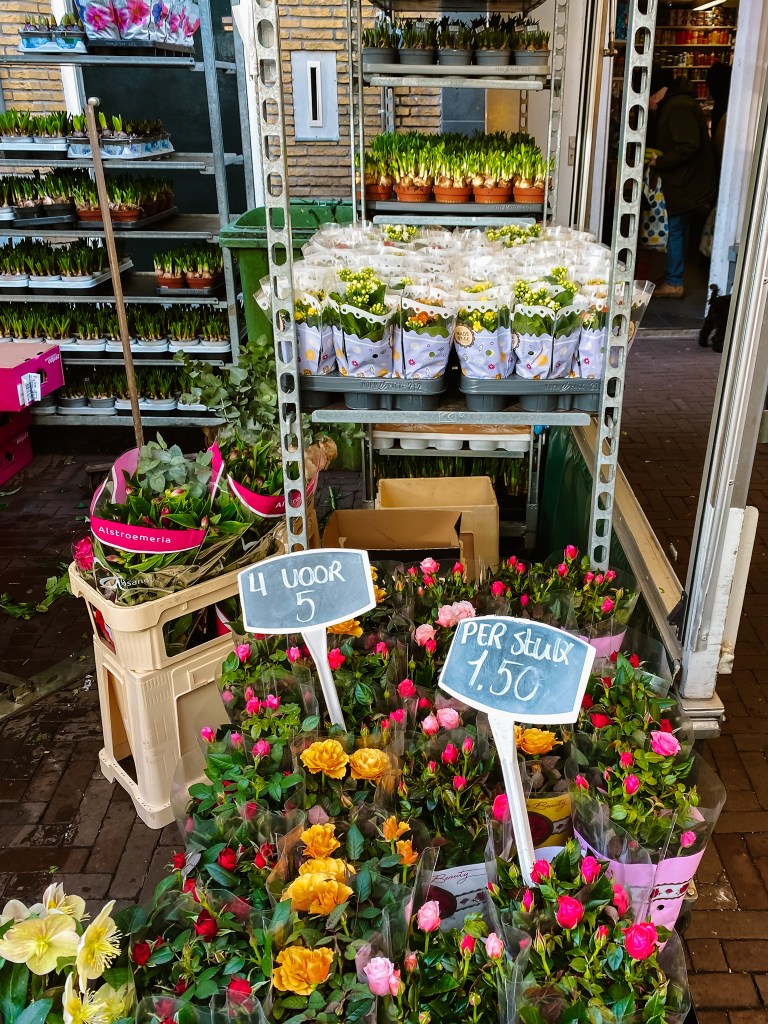
Today’s contribution to the vegan food diary started with a trip to my old neighbourhood of Kinkerbuurt. I went there for a boxing class (life hack: take a boxing is doing something positive by lowering the chances of negative outcomes) and decided to take a stroll around Ten Katemarkt, once my go-to place for fresh produce. Many things are unfortunately still wrapped in plastic even here.

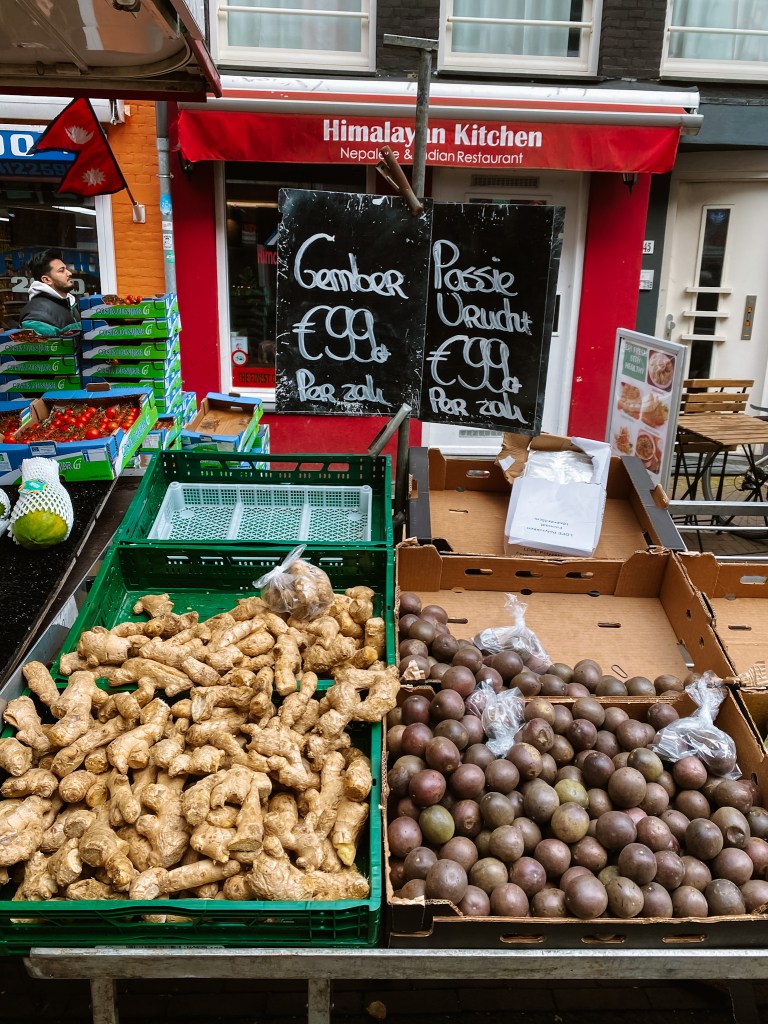

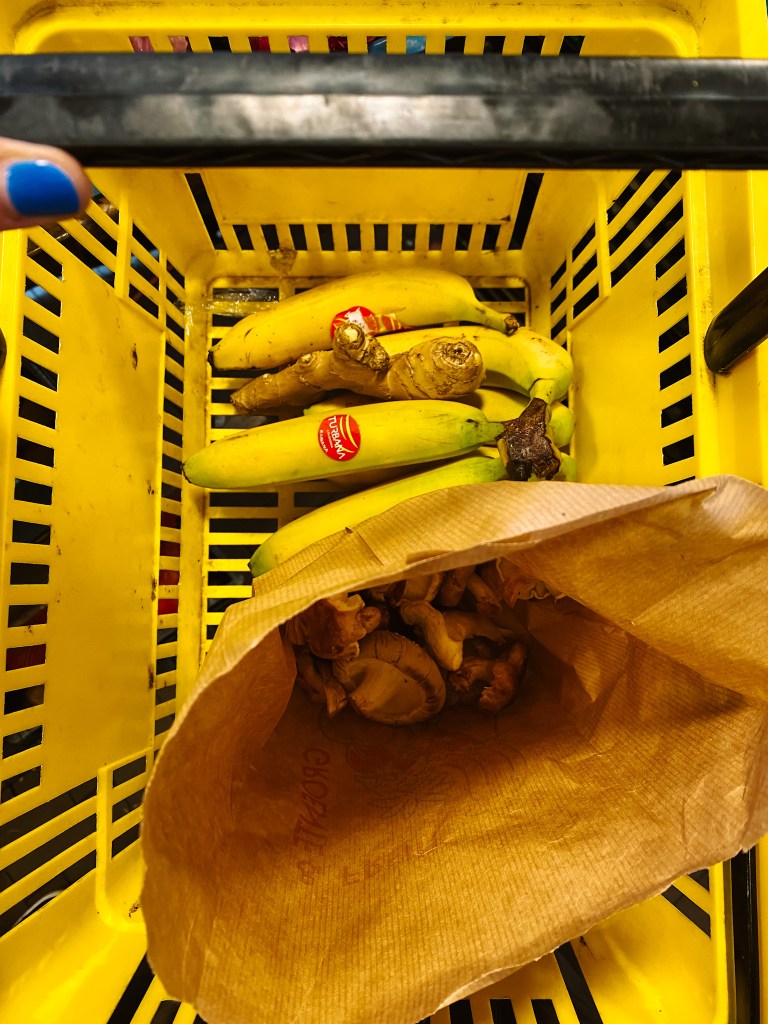
This market, despite its proximity to the city centre, is still very much residential and primarily serves the needs of the neighbourhood. I picked up some bananas, ginger and shiitake mushrooms (€5.50 altogether).

Feeling like I needed a sweet fix, I decided to try my hand at making vegan sweet potato brownies using this recipe. I’ll be honest, I wasn’t too sure about it, mostly because I’m not much of a pro at vegan baking. But my OH MY, these healthy brownies turned out to be insanely delicious. Not to mention their nutritional value, as they only need oats, seeds, bananas and sweet potatoes – you can replace sugar with sucralose or stevia. Definitely a solid 10/10, would totally suggest giving them a go.


Other challenges that I tackled today were compost (going strong), unplugging devices that are not in use (finally remembered), five-minute shower (failed really bad), no waste (failed due to food packaging and contact lenses), no single use plastic (fail due to a bag of popcorn I made at home).
To sum up, this is today’s progress:
| SUCCESS | FAIL |
|---|---|
| Vegan food | No waste (food packaging + contact lenses) |
| Compost (coffee + food scraps) | Five-minute shower (jesus lord 🙄) |
| Unplug devices that are not in use | No single-use plastic (food packaging) |
- People even have written their Master’s thesis about Oatly’s marketing success ↩︎

 Fair February
Leave a reply to Day 10: Where Eco-Care Meets Self-Care – Fair February Cancel reply